Dread is the real name for the Sunday scaries
Sunday scaries isn't a medical label. It's dread, the measured cost of waiting for Monday, and it has a name in English that Spanish never quite got.
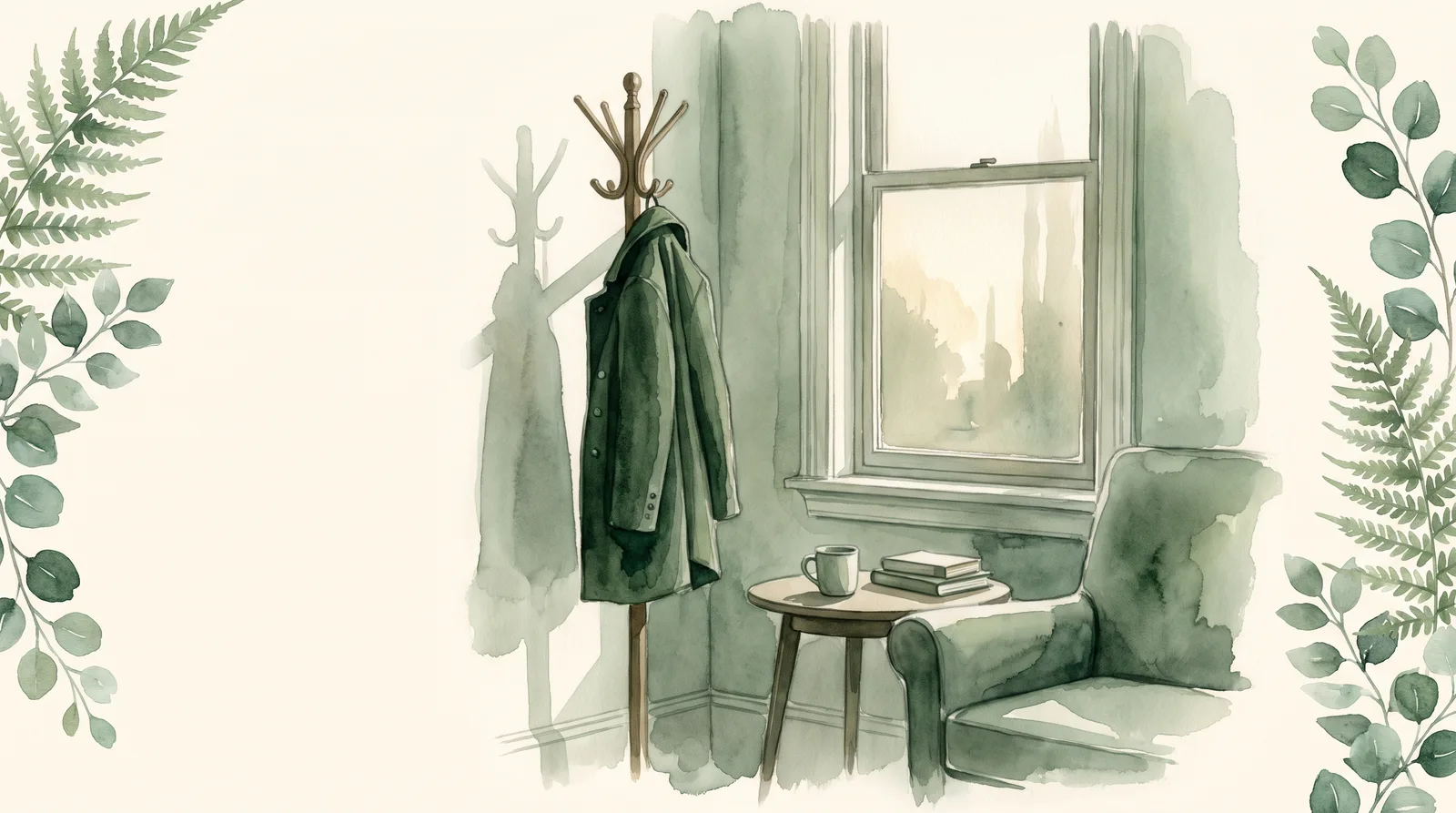
In a study of 30 undergraduates, people paid more to avoid an electric shock scheduled three days out than to avoid the same shock right now: waiting for something bad costs more than the thing itself.
It’s five o’clock on a Sunday and nothing has happened. No bad news, no email, no reason. And still the afternoon changes temperature: the free hours you still technically have stop feeling free. Everyone who works a five-day week seems to know this by feel, and everyone reaches for the same shorthand — the sunday scaries. Fewer people know that the feeling underneath the phrase has a name of its own, and a number attached to it.
Why it hurts before anything has happened
What you feel on Sunday afternoon isn’t a reaction to something occurring. It’s a reaction to something that hasn’t occurred yet. Economist George Loewenstein gave that mechanism a technical name in 1987: dread — the negative utility of anticipating something unpleasant, distinct from living through it. In a hypothetical-payment survey of 30 undergraduates, Loewenstein found they’d pay more to avoid a (non-lethal) electric shock scheduled three days out than to avoid the identical shock immediately. Given the choice, they preferred to get it over with rather than keep waiting for it.
Sunday afternoon isn’t Monday. It’s the wait for Monday, and Loewenstein measured something intuition already suspected: the waiting has its own cost, separate from whatever it is you’re waiting for. That’s how an entire Sunday can hurt before the workweek has technically started.
Three feelings, stacked
Part of why this is hard to talk about precisely is that it isn’t one sensation. It’s three, layered on top of each other.
There’s the dread itself — Loewenstein’s term, the weight of what hasn’t arrived yet. There’s the threshold: Sunday afternoon is the exact point where the person you were on Saturday ends and the person you’ll be on Monday begins, and crossing that line costs something every single week, routine or not. And there’s a small grief — not the grief of losing something large, but of a short, already-limited stretch of free time running out before you got to use all of it. None of the three is dramatic on its own. Stacked, at five o’clock on a Sunday, they add up.
The word Spanish never quite got
“Sunday scaries” isn’t a clinical term or a medical label — it’s workplace and internet slang, about as formal as “hangover,” and it names this exact texture without pretending to medicalize it. Underneath the phrase is the mechanism Loewenstein described with academic precision: dread.
Spanish doesn’t have an equally short, equally casual equivalent. What circulates in Spanish-language content is either a direct import of the English phrase or “síndrome del domingo” — “Sunday syndrome” — which wraps a non-condition in a medical label. A syndrome is a cluster of symptoms belonging to a medical condition; what you feel at five on a Sunday doesn’t meet that bar, and calling it one adds alarm exactly where the goal should be precision. The closest word Spanish actually has is desazón — inquietud, disgusto, malestar interior, per the Diccionario de la lengua española — but it’s undated: it covers any diffuse unease, not this specific one, the kind that arrives on one particular day for one particular reason.
Does the data actually back this up?
Yes, with a limit worth stating plainly. Helliwell and Wang (2014) analyzed over 600,000 responses from the Gallup/Healthways US daily poll and found that people consistently report more happiness and less worry, sadness, and anger on weekends than on weekdays — and that the effect is about twice as large for full-time workers as for everyone else.
The limit: the poll asks about “yesterday’s” emotions as a single block, so it can’t isolate a Sunday-afternoon dip specifically from the rest of the day — it measured the whole day, not the hour the mood turns. What it does support, honestly, is the bigger claim underneath the phrase: the swing between weekday and weekend mood is real, measurable, and tied to work. It isn’t a feeling you’re inventing, and it isn’t unique to you.
Leave your email and we write to you the day it opens. Once you confirm it, the team plants a real tree.
What changes when you name it correctly
Lieberman and colleagues (2007) found something narrow but useful: when someone picks the exact word for an emotion they’re looking at, amygdala activity drops — the brain’s alarm quiets slightly, in the moment, measured inside a scanner. That isn’t proof that naming fixes anything. It’s evidence that naming does something, and that the something points toward calm rather than toward more alarm.
Applied to a Sunday afternoon, that swaps one sentence for another. “I’m anxious” is imprecise, and it borrows a word that belongs to a different, clinical picture. “I’m dreading Monday, and the waiting has its own weight, separate from whatever Monday turns out to be” is longer, but it’s accurate — it separates what you feel now from what you fear later, which is exactly the distinction clinical anxiety, by definition, fails to make on its own. Writing it that way is a different act than just sitting inside it.
One honest note before closing. If this doesn’t stay inside Sunday afternoon — if it follows you into Tuesday, Wednesday, every day of the week, or starts feeling heavier than dread — that’s no longer what this piece is about, and it isn’t something an article can resolve. That’s a conversation for a professional, not more writing about it.
Frequently asked questions
Is this the same as Sunday anxiety? No, and the difference matters. “Sunday anxiety” puts a clinical label on an experience that isn’t one: what you feel Sunday afternoon is dread, with a studied mechanism behind it and no clinical label required. If the discomfort outlasts Sunday or starts interfering with sleep or functioning, that’s a different conversation, and it belongs with a professional.
Why does English have a phrase for this and Spanish doesn’t? The feeling isn’t different between languages — the phrase just caught on first in English, through office culture and social media, casual and short from the start. Spanish hasn’t settled on an equivalent that’s equally short and equally non-clinical yet. What circulates for now is either a direct import of the English phrase or borrowed medical language, which is exactly what this piece avoids using.
Does it hit everyone the same way? No. Helliwell and Wang (2014) found that among people satisfied with their jobs — 90% of their survey respondents — the weekend effect was only about a third the size it was for people who weren’t. Dreading Monday isn’t a fixed personality trait: it tracks, in large part, how good or bad the thing you’re dreading actually is.
If this sounds familiar, there’s more on why naming emotions helps and what to do when your mind won’t stop racing at night — the same dread, on a different clock. And if you’ve never tried writing this down instead of just sitting in it, starting a journal takes less time than the dread itself usually does.
References
- Loewenstein, G. (1987). Anticipation and the valuation of delayed consumption. The Economic Journal, 97(387), 666–684.
- Helliwell, J. F., & Wang, S. (2014). Weekends and subjective well-being. Social Indicators Research, 116(2), 389–407.
- Lieberman, M. D., Eisenberger, N. I., Crockett, M. J., Tom, S. M., Pfeifer, J. H., & Way, B. M. (2007). Putting feelings into words: Affect labeling disrupts amygdala activity in response to affective stimuli. Psychological Science, 18(5), 421–428.
Double confirmation: you get one email and decide. Confirm it and the team plants a real tree. One-click unsubscribe, anytime.